
Vocational education and training—often shortened to VET, meaning education that prepares people for specific occupations and professional fields—is receiving renewed attention across many education systems. Policymakers are debating how vocational pathways connect to labour markets, schools are working to support students through transitions into training, and researchers are examining how participation and completion can be improved.
This blog series begins with the analysis of the VET landscape in five different countries that explore these challenges in depth across Spain, Estonia, Scotland, Denmark, and Croatia. While each analysis focuses on a different national context, they all examine vocational education through the same core themes: attractiveness, transition, participation and dropout prevention. In simple terms, the reports ask three connected questions:
- How is vocational education perceived and presented to learners?
- How do students move from school into vocational pathways?
- What helps them remain in those programmes and complete them successfully?
Taken together, these reports offer a detailed look at how vocational education is currently understood, discussed, and reformed across five different systems.
Why this series matters
One of the most striking aspects of the reports is that they show vocational education being discussed not as a fixed model, but as a field that is constantly evolving. Across the five countries, reforms are underway to update programmes, strengthen workplace learning, support students during training, and connect vocational pathways more clearly to both employment and further study.
Yet the reports also show that many of the questions surrounding vocational education are longstanding ones. Issues such as the public perception of vocational routes, the transition from general schooling into vocational programmes, and the risk of students leaving programmes early continue to appear in policy debates and research discussions. Rather than presenting a single conclusion, the reports highlight how these issues appear in different forms depending on the structure of each national education system.
For readers who work in education—whether in schools, ministries, universities, or research institutions—this perspective is particularly valuable. It allows us to step back from individual reforms and see the broader questions shaping vocational education today.
Three questions at the heart of the reports
Although the five reports describe different national systems, they are organised around the same three themes. These themes provide a shared framework that helps us understand how vocational education is experienced by students and institutions.
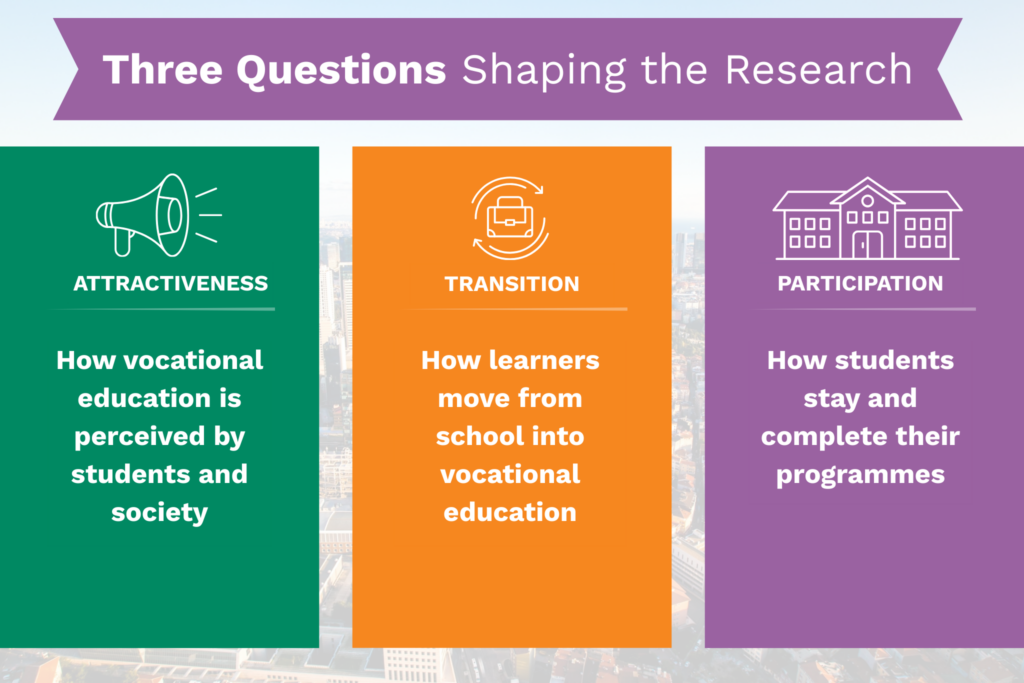
1. Attractiveness: how vocational education is perceived
The first theme concerns how vocational education is viewed by students, families, and society more broadly. In many countries, vocational programmes compete with general academic routes for student interest and recognition.
The reports explore how vocational education is promoted, how its reputation is discussed in policy debates, and how its position within national education systems shapes its public image. They also look at measures that aim to strengthen the visibility of vocational pathways and present them as meaningful options for young people.
Understanding how vocational education is viewed matters because perception can influence the decisions students make when they choose their next step after compulsory schooling.
2. Transition: moving into vocational pathways
The second theme focuses on transition—the point where students move from general education into vocational training as well as out of VET and into employment. This moment can involve many factors: career guidance, school choices, information about programmes, and the structure of the education system itself.
The reports examine how countries organise these transitions and what kinds of support are available to students as they make these decisions. Some systems emphasise strong links between schools and training providers, while others focus on guidance services, preparatory programmes, or partnerships with employers.
These transition points are important because they often shape the first experience students have with vocational education.
3. Participation and dropout prevention
The third theme focuses on what happens after students enter vocational education and training, especially whether they can remain engaged, progress through their programme and complete it successfully.
Across the reports, this theme includes measures designed to support learners during their studies, initiatives aimed at preventing early leaving and policies that focus on well-being, mentoring, or flexible ways for students to continue in VET and complete their training.
These measures reflect an understanding that successful vocational education is not only about programme design—it is also about the support structures surrounding learners.
A shared framework, different national contexts
While the reports share these themes, they also emphasise that vocational education systems are shaped by national institutions, labour markets, and policy traditions. The structure of vocational pathways, the balance between school-based learning and workplace training, and the routes available after completion can vary widely between countries.
Because of this, the five national reports do not present one unified picture of vocational education. Instead, they offer five perspectives on how similar challenges are addressed in different systems.
This is precisely what makes the series interesting. By looking at each country individually while keeping the same analytical lens, the reports allow us to see both the diversity of vocational education and the common questions that run through it.
What readers can expect
This series is intended for a broad audience interested in vocational education:
- Schools and educators, who work directly with students making choices about their futures
- Policymakers and administrators, who shape the structure of education systems
- Researchers, who study education, training, and labour-market transitions
- Students and learners, who want to understand the pathways available to them
Each article will focus on one country and explain how vocational education is organised there, what reforms are currently underway, and what questions the national report raises about the future of vocational pathways.
Part 1 of a six-part series
This article is the starting point.
It introduces the themes and the framework used across the five national reports. The next articles will take a closer look at each country and explore the specific policies, structures, and debates described in the reports.
The upcoming articles in the series are:
- Spain: Understanding the current direction of vocational reform
- Denmark: The dynamics of a dual vocational system
- Estonia: Vocational education, transition, and participation
- Scotland: Pathways between school, college, and work
- Croatia: Vocational education in a large upper-secondary sector
Together, these articles will build a clearer picture of how vocational education is evolving across different national contexts—and why the questions surrounding it remain central to education policy today.